


Coraltree provides a comprehensive introduction to incremental backups as a core component of modern data security. An incremental backup builds upon an initial full backup and subsequently captures only those files that have changed since the last backup. This significantly reduces both backup duration and storage requirements compared to repeated full backups, which provides a noticeable relief, especially for small and medium-sized businesses. At the same time, this principle requires a clear restoration sequence: for a complete restoration, the last full backup as well as all subsequent incremental backups must be available in the correct order and can be applied systematically.
The advantage is obvious: lower bandwidth consumption, fast pipelines, and better utilization of storage capacity. In this context, differential backups can also be considered an alternative, as they combine data backup with a pattern based on the most recent full backups. This means that recovery time tends to be reduced more quickly when using previous versions for disaster recovery, but storage requirements increase with each differential backup. At Coraltree, we seamlessly integrate incremental backups into our central platform, allowing you to automatically schedule, scale, and manage backups without disrupting running systems. Comprehensive reports, status overviews, and notifications help IT teams monitor the status of each backup and respond to issues in a timely manner. Where security is paramount, we rely on modern encryption for data at rest and in transit, as well as redundant copies across multiple locations to minimize downtime.
At the same time, our approach remains flexible: you can actually perform incremental backups daily, hourly, or at custom intervals, depending on data availability and recovery objectives (RTO/RPO). Finding the right balance between recovery time and storage space requires planning, testing, and ongoing optimization. With Coraltree, you create a robust, scalable solution that doesn’t treat incremental backups as an isolated component but rather as an integral part of a holistic backup strategy, including retention, recovery, and compliance requirements.
Table of Contents
- Incremental Backup: Definition and Basics
- Incremental Backup in Detail
- Variants of Incremental Data Backup
- Differential Data Backup: Basics and Use
- Incremental or Differential Data Backup?
- Incremental Data Backup in Corporate Practice
- Technical aspects: Storage, data formats, and recovery processes
- Risks, Benefits, and Limitations of Incremental Data Backup
- FAQ
Incremental Data Backup: Definition and Basics

Incremental backup is a clearly defined method of data backup in which, following an initial full backup, only files that have been modified or newly added are backed up on an ongoing basis. This significantly reduces storage requirements and shortens the backup window. The process is based on the assumption that the majority of data remains unchanged or changes very little between backups. Unlike a full backup, each incremental backup captures only the changes made since the last run; as a result, incremental backups are often considered faster. For restoration, you generally need the initial full backup, followed by all subsequent incremental backups in the correct order, so that the file can be restored to its current state. This principle influences a company’s backup strategy, as it optimizes time, bandwidth, and storage costs.
A typical process looks like this: First, a full backup is created at the beginning of a cycle, followed by regular incremental backups that contain only changed blocks, files, or metadata. If an incremental backup is lost or corrupted, the recovery process often must fall back on the last functional full backup plus all remaining incremental steps. Advantages include short backup times, lower storage requirements, and faster planning for rapidly changing environments. It should be noted that recovery may be slower under certain circumstances because multiple partial steps must be merged. In practice, incremental backups are often combined with a regular backup strategy that also includes periodic full backups and, if necessary, differential backups to increase resilience against loss scenarios.
Coraltree Systems offers practical solutions that securely integrate these fundamental principles into their architecture, enabling companies to achieve efficient storage utilization and predictable RTOs, thereby reliably protecting data. With the correct parameters, schedules, and offsite backups, you can achieve maximum availability and minimize downtime. Coraltree Systems supports customers in the implementation, training, and continuous optimization of incremental backups, ensuring that protection remains robust in the event of cyberattacks or hardware failures, thereby increasing resilience.
Objectives of Incremental Backups in Businesses

The goals of incremental backup in enterprises include protecting business-critical data, minimizing downtime, and making efficient use of storage resources. By backing up only changed files, the time required for backups is reduced, as is the load on networks, resulting in lower operating costs. In a typical backup plan from Coraltree Systems, this approach ensures that relevant changes are captured daily without copying the entire data set weekly. Incremental backups enable rapid file-level recovery, especially when initiated with a stable, consistent full backup. Key objectives include maintaining business availability and reliability, reducing the backup window, minimizing recovery time, and avoiding unexpected costs from redundant copies. Further enhanced RPO and cost optimization ensure the scalability of IT infrastructures, enable cloud or hybrid strategies, and support compliance requirements by establishing clear retention and access paths. At Coraltree Systems, this means: centralized, transparent management, automatic integrity checks, encryption at rest and in transit, and seamless recovery scenarios. This ensures business continuity, customer reliability, and innovation even in the event of data loss. Consistent implementation requires clear responsibilities, regular recovery testing, automated reporting, and a consistent retention policy. For Coraltree customers, this means a reliable foundation for business continuity, risk minimization, and transparency toward stakeholders. They benefit from rapid response, clear reporting, and reliability.
What does incremental backup mean?

What is incremental backup? Incremental backup refers to a backup approach in which, after the initial full backup, only files that have been modified or newly added are backed up. This significantly reduces the time required for each backup operation, since the majority of the data remains unchanged. At Coraltree Systems, we rely on a process-oriented solution that uses the last full backup as a starting point and stores subsequent backups as increments. This simplifies daily backup maintenance, reduces storage requirements, and minimizes network load without compromising data availability. Restoration can be performed in two steps: first the last full backup, then all relevant increments in the correct order. This approach is particularly well-suited for data-intensive environments where only a portion of the files changes daily. One advantage is scalability for hybrid and cloud environments, which enables artificial intelligence and automated integrations that keep backup schedules transparent. Overall, incremental data backup offers an elegant balance between speed, cost, and security. With Coraltree Systems, companies gain a clear, traceable framework for recovery points and continuous data security. In addition, our solution provides continuous monitoring, regular recovery testing, and clear guidelines; this allows RPOs, RTOs, and compliance requirements to be reliably planned and tracked without causing operational disruptions and minimizes downtime.
When is an incremental backup a good idea?

Incremental backups are useful when data changes continuously but the volume of changes remains manageable, allowing you to avoid regular full backups. With this approach, only files that have changed since the last backup are copied, which significantly reduces backup time and network load. For companies with large amounts of data, this means that storage costs decrease while the regular availability of important files is maintained. It is important that the initial full backup be followed by additional incremental backups, so that recovery requires a sequence of partial copies; the order must be strictly adhered to. A strategy from Coraltree combines incremental backups with scheduled full backups to achieve a balance between storage requirements and fast recovery. This method is particularly suitable when change rates are moderate, the network is stable, and recovery time and downtime are taken into account. For the data volumes of modern business applications, a hybrid or cloud-near implementation is ideal, where incremental backups coexist optimally with other backup types. In practice, this means lower costs per terabyte and flexible retention policies. Companies should regularly conduct backup restoration tests to minimize losses in the event of data loss. In addition, clear data volume control, supported by regular tests, ensures improved risk mitigation and enhanced security in the Coraltree Backup environment. This increases confidence and reduces downtime.
Terms in context: backup, data backup, full backup, recovery

A clear definition of terms is essential for effective incremental data backup. In the context of backup, organizations must distinguish between backup, restoration, and backup procedures. Backup generally refers to the process of copying data so that it can be restored in the event of loss. A backup is the specific data set stored for this purpose; it forms the basis for restores. The term full backup describes a complete copy of all selected data, which requires significant time and storage but enables simple restoration. Incremental backup focuses on backing up only files that have been modified since the last backup; this reduces storage requirements and speeds up the backup process. Restoration from incremental backups involves several steps, starting with the last full backup and all subsequent incremental backups until the desired restore point is reached. In practice, a hybrid strategy combining full backups with subsequent incremental backups often strikes a good balance between recovery time and storage requirements. This also includes secure encryption and a clear retention policy to ensure the integrity and availability of the data. Backups should be tested and documented regularly. Through consistent monitoring, regular backup checks, and consideration of RPO and RTO, companies can ensure that data can be quickly restored in the event of a failure. These principles help in selecting backup strategies within the Coraltree solution.
Incremental Data Backup in Detail

Incremental backup is an advanced data backup method in which only data that has changed since the last backup is copied. It builds on an initial full backup and, by performing small, targeted copies, ensures that backups are created quickly and resources are conserved. In a typical Coraltree solution, this technique is centrally managed: An initial full backup is created at the start of a cycle, followed by incremental backups that only include new or modified files. This significantly reduces storage requirements compared to repeated full backups, while increasing backup speed.
One drawback, however, is the potentially longer recovery time: To reach the state of a recovery point, all relevant incremental backups must be applied in the correct order. Modern systems from Coraltree minimize this complexity through metadata, checksums, and integral verifications, ensuring the recovery process remains robust. Choosing the right backup plan depends on the risk assessment, data class, and the required RTO and RPO requirements. Depending on whether backups are stored locally, offsite, or in the cloud, storage requirements may vary; typically, storage requirements for purely incremental backups are lower than for a purely differential strategy. Additionally, recovery from incremental sets enables a high backup frequency, which is particularly useful for systems with heavily accessed data sources.
Coraltree offers options such as encrypted transmission (AES-256), versioned storage locations, and robust integrity checks, enabling companies to ensure reliable availability even with large volumes of data. For emergencies, it is recommended to keep at least one recent full backup and the immediately preceding incremental sets on hand. This creates a balanced ratio of speed, cost, and security that appeals particularly to small and medium-sized businesses seeking a consolidated, low-maintenance solution without compromising on recovery. Experience shows that a well-planned incremental backup reduces downtime, saves resources, and provides a clear roadmap for long-term data security with Coraltree.
Starting point: A complete backup as a foundation

The starting point for every incremental backup in the Coraltree architecture is a comprehensive full backup. This full backup captures the operating system, applications, data, and configurations in a consolidated, restorable image file. Subsequent backups are created incrementally from this baseline, which reduces the time required for daily backups and makes efficient use of storage space. Choosing the full backup as the starting point enables robust recovery, as the restore path always originates from this starting point. At Coraltree Systems, the full backup is typically scheduled outside of business hours to minimize disruptions and keep downtime to a minimum. Subsequent backups capture only files that have changed since the last backup step; this keeps the process lean, flexible, and scalable. If you are considering a differential approach, this can further accelerate recovery by compiling all changes since the last full backup. It is important to have a clear retention policy and perform regular integrity checks to keep storage requirements under control. The combination of a stable full backup as a foundation and strategically scheduled backups forms the core component of the backup strategy for Coraltree. This ensures availability, minimizes risks, and guarantees rapid recovery in an emergency.
How does incremental data backup work from a technical standpoint?

How does an incremental backup work from a technical standpoint? An incremental backup is based on two components: the initial full backup and subsequent incremental backups. With the Coraltree approach, the secure platform first creates a full backup that transfers the entire dataset from a defined source into a secure image or block-level copies. This process serves as the starting point for all subsequent steps. Subsequently, incremental backups are created that store only files and blocks that have changed since the last backup operation. This means that each new backup contains only the delta information, not the complete data. Technically speaking, file names, timestamps, checksums, and block addresses are recorded in a metadata database, ensuring that restoration occurs deterministically. The recovery process begins with the most recent stable full backup and then applies all subsequent incremental backups in the correct order. To minimize recovery windows, Coraltree uses different approaches depending on the architecture, such as block- or byte-level backups, as well as synthetic full backups that reconstruct a new full backup from the last incremental backup and the last full backup without having to transfer all data again. The result is efficient use of storage space and rapid recovery in an emergency, while maintaining transparency and integrity. This approach adapts flexibly to growing environments and supports efficient disaster recovery strategies for Coraltree’s customers.
Storage space and bandwidth for incremental backups

With incremental backups, storage requirements depend on the changed data, which is why storage space requirements (referred to as "storage requirements") are flexible in practice. By capturing only changed blocks, bandwidth is saved because less data needs to be transferred over the network during regular backups. Efficiency depends on the granularity of the backup: The byte, block, or file level influences how much new data is generated. Key advantages include lower storage consumption and faster initial backups; however, dependency during recovery increases because multiple intermediate states are required. A typical strategy combines a one-time full backup with subsequent incremental backups, resulting in a logical sequence that places less strain on bandwidth. Companies such as Coraltree Systems optimize precisely these parameters through compression and deduplication techniques as well as centralized monitoring, ensuring that storage requirements and bandwidth remain at the necessary levels. For robust disaster recovery, however, a clear sequence of backups is essential to ensure reliable recovery. In hybrid environments, cloud storage can be used to make backup cycles secure and scalable without straining local systems. Proper planning also takes into account WAN bandwidth, RTOs, and RPOs so that backups can be restored promptly. Modern solutions minimize duplicates, compress data, and provide reliable protection against outages. Coraltree offers suitable strategies.
Chain of safeguards and full recovery

A well-designed backup chain forms the foundation of any reliable recovery strategy. In practice, this chain begins with a full backup, which serves as the secure starting point for all subsequent steps. The incremental backup strategy then generates successive backups that contain only the data that has changed. This significantly reduces storage requirements and backup duration. It is important that each new incremental backup builds on the previous one, resulting in a consistent chronology of all changes. For rapid recovery, a differential backup can also be used, which includes all changes since the last full backup. During recovery, you typically need the last full backup plus the most recent incremental backup or, alternatively, the last full backup plus the last differential backup—depending on the chosen strategy. Coraltree Systems offers a centralized, integrated backup architecture that maps this chain securely, auditable, and automatically. Consistent recovery points are ensured through Trusted Checks, integrity checks, and encrypted transfers. Robust recovery requires clear RTOs and RPOs, regular testing, and traceable backup retention. This enables fast, reliable recovery, even in the event of major outages or cyberattacks. This page explains the benefits of a stable backup chain for every business. You benefit from solution-oriented planning, auditability, and immediate availability in an emergency.
Change Detection: Files, Blocks, and Bytes

Change detection is the core principle of incremental data backup: it reliably determines which parts of a dataset have been modified and therefore need to be backed up again. At the file level, it compares filenames, sizes, timestamps, and contents to identify discrepancies. At the block level, it examines storage blocks within a file and checks whether their contents have changed since the last scan. Finally, at the byte level, individual bytes are evaluated to detect even the smallest changes. For businesses, this three-tiered approach allows for flexible adaptation of the backup strategy: files may have undergone extensive changes, while blocks or bytes may show only partial changes. The detection process uses cryptographic hash values, metadata, and version histories to ensure data integrity and reliably support future restores. Through differentiated detection methods, storage space and network bandwidth can be minimized without compromising the accuracy of the recovery. In practice, Coraltree thus efficiently performs incremental backup operations: First, a baseline state is recorded; then, only relevant changes are captured. The targeted documentation of changes facilitates rollbacks; you benefit from fast recovery times and transparent tracking of changes. This results in robust backup plans that reduce downtime and enhance the protection of business-critical data. This approach supports objectives such as data security, compliance, and rapid disaster recovery. Through automation, processes remain consistent, traceable, and auditable, while end users experience minimal disruption. Detection remains robust.
Types of incremental backups

Coraltree Systems offers businesses a comprehensive overview of the various types of incremental data backup, which can be optimized based on specific requirements for speed, storage space, and recovery time. The foundation is an initial full backup, upon which subsequent incremental backups are built. With incremental data backup, only the files that have changed since the last backup are captured, making daily backups fast and storage-efficient. The downside is a potentially longer recovery time, as multiple backup sets often need to be applied to ensure a consistent recovery. In addition to the classic approach, models such as differential backup and synthetic full backup differ: The former collects all data changed since the last full backup, while synthetic full backup generates a new full copy on the server from a full backup plus subsequent incremental backups without re-reading all source data.
The "forever incremental" approach is particularly recommended for cloud or hybrid environments, where only a single full backup serves as the starting point and incremental backups are continuously generated and linked together via metadata. Coraltree Systems offers centralized management, integrity checks, and recovery paths for these approaches to ensure that RPOs and RTOs are consistently met. In practice, these variants involve different trade-offs: recovery speed, storage requirements, network utilization, and retention periods vary depending on the chosen model. Companies should therefore develop an intelligent backup plan that incorporates full backups periodically and covers the daily data volume with regular incremental backups. Choosing the right strategy depends on data freshness, recovery time, and costs. With Coraltree Systems, you have a platform that supports these decisions, provides transparency, and ensures data availability even with large volumes. Such models can be automated, tested, and audited within a modern backup platform.
A clear definition of RPOs/RTOs, regular recovery tests, and a sound retention strategy help control costs and ensure availability. Coraltree provides a dashboard that offers clear reports, health checks, and compliance checks. The right mix of incremental, differential, and full backups depends on the volume of data, the rate of change, and business protection requirements. Companies benefit from a transparent view of current backup and recovery status through a single console workflow that accounts for both local and remote storage locations.
Forever Incremental Backup (Incremental Forever)

Forever-Forward-Incremental is a modern backup strategy from Coraltree that minimizes the risk of data loss while reducing computing and storage requirements. It starts with a single, full backup, followed by continuous incremental backups that capture only the files that have changed. This approach keeps the backup process as lean as possible because previous backup stages are not copied again. Coraltree’s system regularly consolidates the relevant increments into a new, complete copy, thereby balancing recovery time with availability. The backup blocks are securely stored on your chosen destination, while metadata for point-in-time restores is persistently managed. A clear retention and risk structure is crucial: Choose a retention policy that regularly removes old data to manage storage space. This method provides you with rapid recovery to the current state while preserving history for compliance and disaster recovery. In practice, this means for your business: reduced storage requirements, lower costs per backup, flexible RTOs, and robust security thanks to Coraltree’s encryption and access controls. This strategy integrates seamlessly with hybrid deployments and leverages Coraltree’s modern encryption, integrity checks, and centralized policy management to keep RPOs achievable and DR-integrated. Experienced backup administrators benefit from deployable profiles that enable secure, fast recovery without unnecessarily burdening operations.
Regular incremental data backup

Regular incremental backups are a proven method for reliably protecting data without having to back up the entire system each time. With this method, only files that have changed since the last backup are copied. This saves time and reduces storage requirements compared to a full backup. In practice, this usually begins with an initial full backup, followed by ongoing incremental backups that build upon one another and together reflect a complete history of the data. The challenge lies in the recovery time, as restoring the desired state often requires applying all incremental backups since the last full backup. Nevertheless, this approach offers advantages: it enables regular updates, minimizes business interruptions, and makes costs transparent. It makes sense for companies to follow a clear plan that specifies how often incremental backups are performed, where they are stored, and how long they are retained. Choosing the right storage infrastructure—on-premises, in the cloud, or hybrid—significantly impacts performance and availability. With the right software and growing confidence in security, this method becomes a central component of data protection and helps minimize data loss, especially during rapid changes. This reduces downtime and keeps processes stable in the long term.
Incremental data backup at the block and byte level

With its block- and byte-level incremental data backup, Coraltree Systems offers a powerful solution for efficient data backup: It starts with a full copy, followed by incremental backups that capture only the blocks that have changed. At the block level, only the storage sectors that have changed since the last backup run are written to, which reduces speed and network load. At the byte level, even tiny changes at the file level can be captured, achieving the highest level of granularity. This multi-step architecture enables fast incremental data backup while keeping recovery steps flexible: For a full recovery, the last full backup plus all relevant subsequent blocks is sufficient; for a smaller recovery requirement, the most recently backed-up stage is sufficient. This approach significantly reduces storage requirements, increases efficiency, and minimizes network load; storage space is utilized efficiently through deduplication and targeted block- or byte-level transfer. In practice, companies benefit from automated tests, integrity checks, and hybrid deployments that connect local backup systems with cloud destinations. Recovery strategies enable resource-efficient planning. Thus, Coraltree offers a robust, customizable solution that reduces downtime and meets security and availability requirements.
Reverse Incremental Backup

At Coraltree Systems, we rely on advanced backup methods that minimize downtime while ensuring data integrity. Reverse incremental backup is a specialized approach that uses a full backup as a stable foundation and continuously applies new backups to it, with changed data remaining behind the current copy. The starting point is a regular full backup. After that, each new incremental backup creates a new copy, but instead of writing the changes to the new full backup, they are integrated into the existing copy, resulting in an up-to-date, complete backup while previous versions are retained as recovery points. For recovery processes, this means: You only need the current full backup plus, if necessary, a few subsequent incremental backups to reach any desired recovery point. The advantage lies in the rapid recovery of a system, as no tedious reconstruction from many individual increments is required. At the same time, this method offers robust options for cyber resilience because previous full backups remain compact and readily available. At Coraltree Systems, we integrate Reverse Incremental into our backup strategy: automated scheduling, AES-256 encryption, redundant storage locations, and clear RTOs/RPOs for fast, secure restores. This allows businesses to benefit from stable recovery processes, low complexity, and transparent cost control.
Full synthetic backup based on increments

Incremental-based full backups are an advanced data backup method that reduces full backup durations without compromising data integrity. With this approach, a synthetic full backup is first created, followed by continuous incremental backups. Instead of copying the entire partition each time, the synthetic full backup uses the existing full backup and subsequent incremental backups to create a new, consolidated full backup in the backup repository. This eliminates the need to re-read the primary source path, reducing network load and minimizing the impact on operations. A synthetic full backup is typically created in the background, often outside of regular business hours, ensuring that restore points are consistently available at all times. For recovery, this means you can work with the most recently synthetically generated full backup, supplemented by the relevant increments that have accumulated since the last synthetic full backup. This technique is particularly suitable where large amounts of data are continuously changing and bandwidth or compute resources are scarce. At Coraltree Systems, we prioritize end-to-end transparency and consistency, ensuring your recovery is fast and reliable, even when daily incremental backups are performed. While you save storage space, you benefit from reduced backup downtime and increased data availability. This approach ensures predictability, security, and operational resilience in hybrid IT environments worldwide, accelerating recoveries and availability.
Differential Data Backup: Basics and Applications

Differential backup is a well-established backup strategy that captures all files that have changed since the last full backup. It offers a good balance between storage requirements, backup time, and recovery time. Unlike incremental backup, which only stores changes since the last backup, the differential method consolidates all changes since the last full backup. As a result, the backup size increases with each run but typically remains smaller than with a continuous full copy. Companies thus benefit from faster restores with moderate storage consumption.
The use of differential backups is particularly suitable where regular disaster recovery plans and short downtimes are required; it can be easily combined with periodic full backup cycles and optimized through sensible retention policies. Following a full backup on Sunday, differential backups on Monday, Tuesday, and beyond capture all changes since that Sunday; for restoration, the latest differential copy plus the corresponding full backup is then sufficient. Advantages include a smaller number of backups to verify compared to many incremental steps, as well as simpler restore planning. A potential drawback is the growing storage requirement over time, which is why retention strategies and archiving rules are critical. At Coraltree Systems, we support your infrastructure with structured recovery planning that ensures transparency, compliance, and testing.
Our solution aims to achieve precisely this balance: cost-efficiency in storage management, robust data availability, and rapid response to disruptions. The key lies in the precise alignment of change volume, backup frequency, storage location (local, cloud, or hybrid), and the desired recovery time. This allows you to reliably protect your organization against data loss without tying up unnecessary resources, and you benefit from a clear, predictable retention strategy that meets security and legal requirements. This approach increases the level of protection without requiring storage resources to grow indefinitely. Regular recovery testing and clear labeling of restore points are essential to ensuring security and business continuity.
How a differential circuit breaker works

In the case of a full backup, the process begins after a full backup has been initiated, which serves as a reference point. From that point on, all changes that have occurred since the last full backup are captured in each subsequent differential backup. The process proceeds as follows: First, the system checks whether the differentiation chain designated for the current backup window is ready to start; then, it scans for new or modified files, marks the changed blocks, and creates a compact archive containing only these changes. This archive is stored in Coraltree Systems’ backup storage infrastructure, securely encrypted, and tagged with metadata to enable point-in-time recovery. It is important to note that each differential copy is cumulative; it therefore contains all changes since the last full backup, not just the changes from the current day. This results in faster creation compared to a full backup, though storage requirements increase as the cycle progresses. In an emergency, recovery is performed using the last full backup plus the most recent differential copy, thereby minimizing RTOs. In practice, differential backups can be easily integrated into a regular schedule to achieve a balance between speed, storage space, and reliability. In doing so, companies benefit from predictive maintenance processes, auditability, and a consistent archiving strategy within the Coraltree platform today.
What is a differential backup?

What is a differential backup? A full backup copies all files, while an incremental backup saves only the changes made since the last backup. A differential backup, on the other hand, captures all changes made since the last full backup. As a result, the backup file grows over time until the next full backup is performed. For restoration, you typically need two sets: the last full backup and the most recent completed differential backup, the latter of which contains the cumulative changes since the last full backup. Compared to ongoing incremental backups, differential backups often enable faster restores since fewer copies are required; however, storage requirements increase over time. Coraltree systems enable seamless implementation of this strategy via a centralized platform that optimizes backup windows, ensures data integrity, and allows for flexible storage in on-premises data centers or secure cloud locations. With AES encryption, role-based access control, and automated testing, the risk of downtime and data loss is reduced. This allows you to plan for recovery and RPO realistically to minimize disruptions and meet compliance requirements.
Limitations of differential backup with growing data volumes

As data volumes grow, incremental backups reach their limits: Although they back up only the changes made since the last full backup, the cumulative number of modified files since the last full backup also increases as data volumes grow. This leads to longer backup windows, increased storage requirements, and more frequent maintenance of index structures. At the same time, recovery can become more complicated because multiple differential backups often need to be combined for a current restore; failed backups of individual blocks can slow down the process or cause it to fail. In practice, this means that differential backups often pose a higher risk for small to medium-sized environments if the backup schedule is not strictly adhered to and large volumes are generated. Coraltree Systems therefore offers a holistic backup strategy that combines incremental backups with synthetic full backups or forever-incremental approaches to enable faster backups without unnecessarily extending recovery time. Our platform scales with growing data volumes, utilizes centralized storage concepts, multi-platform support, and secure encryption, enabling you to maintain operations for any RPO and RTO. It remains crucial that the chosen method reflects your company’s requirements and is regularly reviewed through audits to ensure optimal resource utilization. Data, backups, storage requirements, recovery time, and RPO serve as key benchmarks in this process. This allows you to maintain transparency, security, and operational continuity in the long term, even as your business grows.
Typical applications for differential fuses

Typical use cases for differential backups: In medium-sized businesses, differential backups help supplement regular full backups with manageable time windows when data changes on a daily basis. This approach backs up all changes made since the last full backup, significantly reducing the backup effort per run while maintaining a faster recovery time than with purely incremental approaches. Differential backups are suitable for applications with a moderate rate of change, as they offer a good balance between backup duration, storage space, and recovery time. In hybrid IT architectures with local backups plus cloud replication, a 3-2-1 strategy can be implemented: a weekly full backup, differential backups in between, and rapid recovery in an emergency. For compliance requirements that demand a traceable version history, differential backups provide a robust foundation, as each differential copy cumulatively contains the changes since the last full backup. In Coraltree environments, these backup levels can be effectively combined with regular recovery tests to minimize downtime. Choosing the right interval depends on the daily change rate, bandwidth, and restore strategy. The advantages include moderate storage requirements, fast restore times, and better backup windows compared to pure full backups or purely incremental approaches. This approach also simplifies employee training and enables quick audits of data protection. This keeps operational processes stable, costs manageable, and security goals achievable. A prerequisite is a suitable backup strategy from Coraltree.
Storage space, backup duration, and restore time
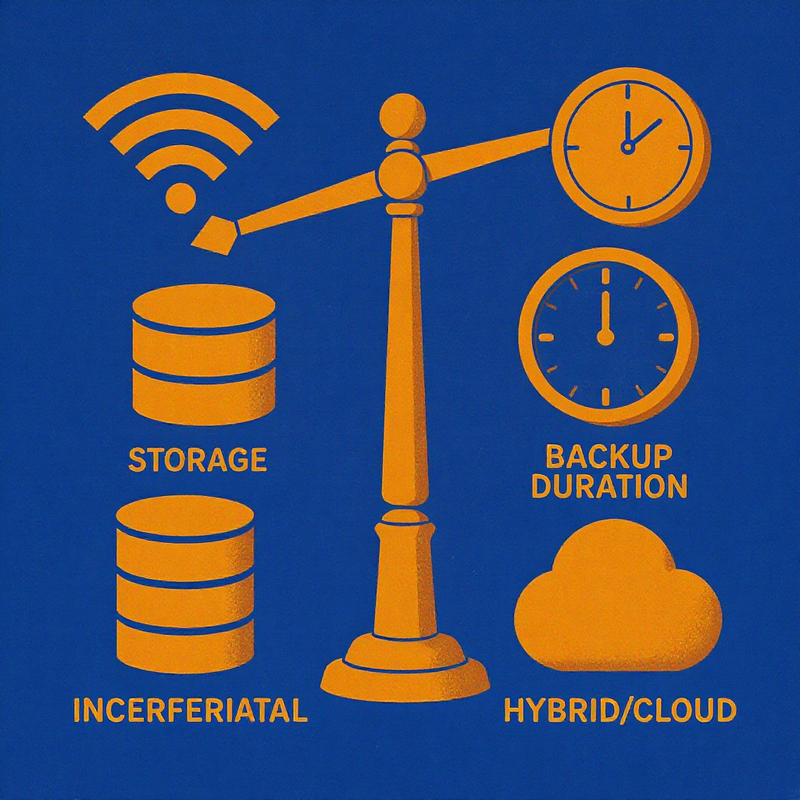
When it comes to storage space, backup duration, and recovery time, the choice between incremental and differential backups affects how data is protected and how resources are utilized. An incremental backup copies only the changes made since the last backup, saving storage space and shortening the backup duration, but it can increase recovery time because multiple partial backups must be combined. A differential backup, on the other hand, copies all changes since the last full backup, requires more storage space than a purely incremental backup, but delivers a faster recovery time compared to purely incremental scenarios, since only the full backup plus the latest differential backup are used. In practice, a hybrid plan is often recommended: daily incremental backups based on a weekly full backup, supplemented by regular differential backups, to optimize storage space and keep recovery time, backup duration, and availability realistic. Coraltree Systems offers a centralized backup solution that seamlessly combines these approaches, automates scheduling, utilizes cloud and hybrid storage, and thus strikes a balance between storage space, backup duration, and recovery time. Through intelligent scheduling, Coraltree also supports rapid disaster recovery with low RPOs and short recovery times.
Incremental or differential backups?

When deciding whether to choose an incremental backup or a differential backup, the key consideration is the trade-off between speed, storage requirements, and recovery time. Both approaches are based on an initial full backup and subsequently back up only the data that has changed. A full backup is typically used as a starting point; after that, systems back up either incrementally or differentially, depending on whether speed or storage requirements are prioritized. An incremental backup captures only files that have been modified since the last backup, keeping backups small and often making the backup process faster. A differential backup, on the other hand, collects all changes since the last full backup, which results in growing backups but enables recovery: With the last full backup plus the latest differential, data can usually be restored quickly.
In practice, this often involves a trade-off between time and storage space. Companies with tight maintenance windows often prefer incremental backup strategies because they require less bandwidth; companies that need more critical recovery capabilities or have sufficient storage space more often rely on differential backups. Our Coraltree Systems solution seamlessly supports both approaches in a single central platform: You plan, monitor, and automate backups so that full backup intervals, retention policies, and recovery tests can be flexibly configured. The platform facilitates encrypted transmission, multi-tier storage, and regular restore tests so that you can respond effectively in an emergency.
Depending on your deployment scenario, you can implement a hybrid strategy where incremental backups handle daily protection, while regular full backups and differential steps ensure long-term retention. This allows you to benefit from lower daily workloads, better RPOs, and a transparent cost structure without compromising on compliance or security, as retention policies are implemented directly within the solution. In addition, Coraltree Systems offers comprehensive monitoring and audit functions to reliably meet operational requirements and data protection regulations.
Backup speed and backup window

A streamlined backup plan aims to maximize backup speed while keeping the backup window as short as possible. At Coraltree Systems, this means an integrated strategy based on incremental backups, as they process only changed data, thereby reducing the time required. At the same time, the combination of synthetic full backups and fast incremental runs ensures that the recovery point remains readily accessible. A short backup window is achieved through centralized scheduling that plans with resource efficiency in mind: during peak times, backups are flexibly rescheduled to times when the load is low. Practical experience shows that storage requirements and bandwidth play a major role; incremental schemes minimize both, especially in hybrid environments with local storage and cloud backups. To minimize downtime, Coraltree places great emphasis on transparent status indicators, ensuring that the recovery of individual files or entire systems is achieved quickly without significantly disrupting daily operations. The choice of the right backup model depends on the change rate, Recovery Time Objective, and Recovery Point Objective; Coraltree provides personalized consulting on this matter to ensure the backup program remains both secure and efficient. Data changes are continuously tracked, delays caused by network congestion are automatically compensated for, and regular reports help IT teams identify risks and adjust their plans. This enhances the transparency and responsiveness of the backup strategy in day-to-day business operations.
Direct Comparison: Incremental and Differential Backups

Direct Comparison: Incremental backup and differential backup are two common data backup strategies that differ in structure, speed, and storage consumption. With incremental backup, only data blocks that have changed since the last backup are backed up. This reduces backup time and storage requirements per backup; however, it increases reliance on subsequent backups, which can result in long recovery times since multiple iterations are necessary. With differential backup, all changes since the last full backup are retained, which increases the size of the backups but speeds up recovery time because only two sets are required. Coraltree solutions typically rely on a balanced combination of both approaches: the fast, granular protection of frequent changes with incremental backups, plus regular, more stable full and differential backups to enable rapid recovery in an emergency. This allows companies to benefit from reduced storage requirements while still achieving rapid disaster recovery, regardless of the size of the database. Additionally, factors such as recovery points (points-in-time), versioning, data integrity, and retention policies play a crucial role. A reliable strategy combines rapid incremental backup processes with robust long-term archives, automated integrity checks, and clear compliance requirements. This ensures that data availability and business continuity remain reliable and auditable even for larger systems. Our experts support you in designing, testing, and regularly optimizing your backup plan—tailored precisely to your industry.
Decision Guide: Which Method for Which Environment?

A practical decision-making guide: Which backup strategy is right for which scenario? Different environments have varying priorities regarding availability, cost, and recovery time. For small sites with limited staff, a clear backup strategy is recommended that supplements regular full backups with incremental backups to conserve storage space. In data centers with rapid change rates and strict RPO requirements, a hybrid approach combining differential backups and frequent restores is ideal, ensuring the recovery process remains robust without straining resources. For cloud-based or hybrid environments, Coraltree recommends a 3-2-1 strategy—multiple copies, different storage locations, and regular testing—to minimize downtime. Coraltree supports both incremental and differential backups as well as full backups on a single centralized platform, allowing you to respond flexibly to business needs. The choice depends on the rate of change, available budget, and desired RTOs/RPOs; with our consulting services, you’ll find a sustainable solution that ensures security, compliance, and rapid recovery. This makes backup planning a core competency of your IT resilience and guarantees consistently reliable availability. Our recommendation prioritizes transparency, testing intervals, role-based approvals, and regular audits to identify risks early and ensure the long-term availability of your systems.
Recovery: RTO, RPO, and Business Impact

Recovery from data loss is more than just a technical process; it determines how reliably a company can continue its critical operations. In practice, RTO and RPO define the two key parameters: the maximum acceptable duration of downtime and the amount of data loss a company can tolerate. A close integration of both metrics with business processes ensures that information and applications can be restored at the right time without violating compliance requirements. In Coraltree Systems’ incremental backup strategies, recovery is supported by robust plans that ensure performance, availability, and transparency. The consequences of delays range from operational disruptions to lost revenue, reduced customer satisfaction, and reputational damage. Companies must therefore validate RPO and RTO through regular testing to reliably map interfaces with supply chains, financial systems, and customer relationship management. A clear disaster recovery strategy minimizes risk, provides transparent decision-making for management, and enables rapid communication with stakeholders. Technical measures such as regular backups, offsite copies, encryption, and audits support business continuity. Ultimately, it is about building trust: in times of crisis, operations remain functional, data access is controlled, and the strategy remains effective.
Incremental Data Backup: Storage Requirements, Cost Analysis

For Coraltree customers, incremental backups represent a significant reduction in storage requirements compared to full backups. The key consideration here is cost: reduced storage requirements lower licensing, hardware, and operating costs, while efficient deduplication and compression further enhance the benefits. Incremental backup only backs up blocks that have changed since the last backup; this creates a cumulative series of snapshots that can grow slowly depending on the retention period. In comparison, a differential backup captures all changes since the last full backup, which enables faster restores but leads to increased storage requirements with longer cycles. For a realistic cost analysis, companies should consider factors such as retention period, location (on-premises vs. cloud), bandwidth, and backup windows. Coraltree offers a centralized, scalable backup platform that enables efficient backup scheduling, recovery, and cost optimization. Cloud storage can be utilized for incremental backups with low baseline loads, while on-premises storage systems enable fast restore paths. Ultimately, the choice of model depends on risk tolerance, the RTO/RPO profile, and the available budget, with recovery time playing a central role.
Incremental Data Backup in Corporate Practice

Today, companies face the challenge of backing up data securely, promptly, and cost-effectively. In practice, incremental backup means that only changed files are copied, which reduces the time required and minimizes network load. A well-thought-out strategy begins with an initial full backup, followed by regular backup runs characterized by the concept of incremental backup and dependent on the most recent backup performed.
In Coraltree’s implementation, this logic is automated and integrated into a unified platform, enabling IT teams to manage clear workflows for planning, monitoring, and auditing. The benefits for the storage network are clear: reduced storage space, lower bandwidth consumption, and faster daily backup runs—especially in hybrid environments where on-premises systems work alongside cloud resources. However, an incremental strategy must also clearly define a disaster recovery plan: To restore data in the event of a failure, you only need the last full backup plus all subsequent incremental packages to reconstruct the system with pinpoint accuracy. The RPO metric plays a central role here: how much data loss is acceptable? Recovery speed, as measured by RTO, must also be realistically planned. In practice, this means that companies requiring rapid availability should also consider optional techniques such as synthetic full backups or reverse incremental backups to optimize recovery times without sacrificing security.
Coraltree also takes into account protection aspects such as encryption at rest and in transit, multi-layered security, and comprehensive compliance. Implementation requires clear responsibilities, regular testing, and automated workflows to ensure the backup program runs smoothly while operational processes continue uninterrupted. Storage space is a key criterion that helps reduce costs during planning while also influencing recovery times. Companies thus benefit from robust, future-proof data protection that encompasses both on-premises resources and cloud options and meets the requirements of modern IT strategies.
Defining a company-wide backup strategy

An enterprise-wide backup strategy defines the framework for how data is systematically backed up, protected, and restored to ensure availability and business continuity. In practice, this means that the strategy is implemented at various levels: centrally, locally, regularly, and in a documented and auditable manner. At its core is the choice of backup method, particularly incremental backups, differential backups, and full backups at staggered intervals, aligned with RPOs and RTOs. A robust strategy begins with a current inventory of the most critical data, applications, and systems, followed by policies for retention, encryption, and access. Coraltree Systems recommends integrating security aspects right from the planning stage and consistently protecting backups against threats, whether through local, offsite, or cloud storage in hybrid architectures. A targeted plan defines backup windows, establishes clear responsibilities, and ensures that recovery is fast, predictable, and traceable. In addition to technical implementation, process documentation plays a central role: who backs up which data, when, via which methods, and with which tests. This creates a strategy that remains flexible, allows for scaling, and minimizes outages. Furthermore, the strategy defines clear RPO and RTO values, regularly tests disaster recovery plans, and incorporates training so that the team can act quickly in the event of disruptions and data integrity is maintained at all times. This significantly and permanently reduces risks, downtime, and operational disruptions.
Analysis of data volumes and rates of change

When planning incremental data backups, Coraltree Systems analyzes the data volumes in network storage and the file change rates across typical backup windows. A thorough analysis begins with determining the current file inventory, the drivers of change, and the migration of metadata or big data. Companies face the challenge of managing growth and variability simultaneously: only parts of systems change daily, but these changes accumulate over weeks. By classifying critical areas and identifying change paths, the incremental backup scheme can be effectively configured. The choice of strategy influences storage requirements as well as the speed of full and partial restores; fast backups save time but often require more storage. A precise analysis encompasses historical trends, preferred retention periods, compression, and deduplication, ensuring that Coraltree customers receive a robust, cost-effective solution. Practical experience shows that network connection overloads, latencies, or snapshot expiration times can be avoided at the macro level by monitoring data blocks instead of entire files. This results in resilient planning that aligns with a modern Coraltree backup portfolio: targeted, scalable, and protected against outages, cyber threats, and unforeseen load spikes. This data-driven approach allows for precise coordination of capacity planning, maintenance windows, and disaster recovery measures, enabling Coraltree customers to respond flexibly to changes, control costs, and reliably scale backup processes. This creates a competitive advantage through planning.
Roles, Responsibilities, and Processes in the IT Team
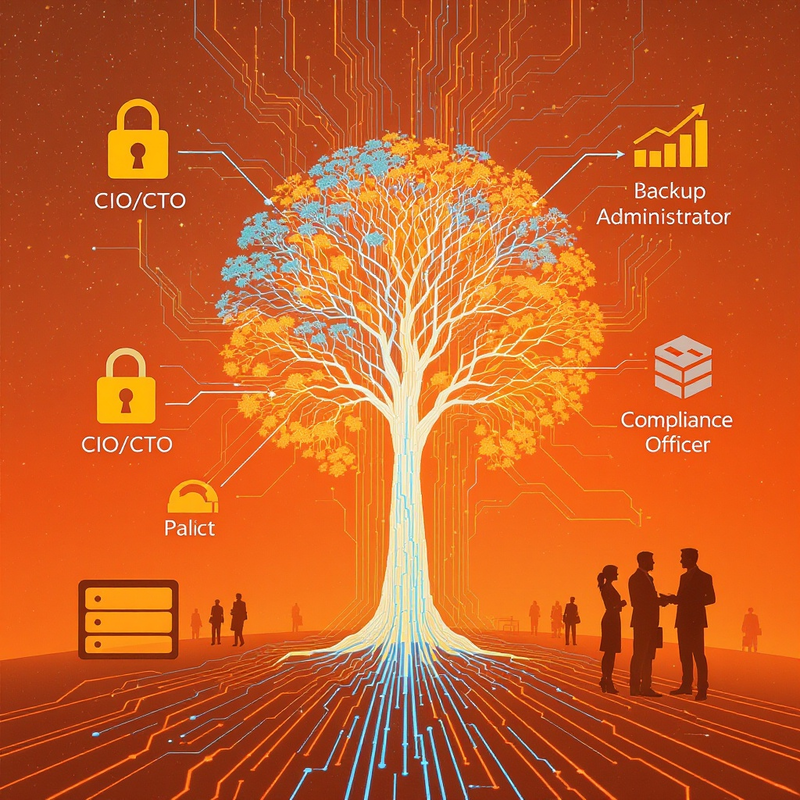
Within an IT team, a clear division of roles is crucial for incremental data backup to ensure that recovery processes function reliably. The CIO/CTO defines goals, compliance requirements, and the budget, while the backup administrator ensures that encryption, access controls, and monitoring are integrated. The backup administrator plans and operates the incremental backup strategy, sets time windows, priorities, and retention policies, and validates the integrity of the backup copies. System engineers operate the infrastructure, back up servers, storage systems, and recovery paths, while the compliance officer ensures that licenses, data protection regulations, and retention requirements are adhered to. In practice, the IT team works closely with support to avoid emergency call-outs and with the business unit to identify critical data. Proper processes include planning and decision-making sessions, documentation of the backup policy, regular checks of backup jobs, automatic notifications, and periodic recovery tests. Coraltree solutions provide centralized control, encryption, and reporting to ensure that recovery processes remain secure, transparent, and traceable. Data protection, minimization of downtime, and clear escalation procedures are standard when incremental backups are used in daily operations. Additionally, the team establishes clear change management processes so that every backup task is subject to approval, version control, and audits. Automated reporting and alerting functions in Coraltree solutions support IT management in tracking RPOs, RTOs, and SLA requirements. Regular training ensures awareness of data security so that employees can avoid errors and recoveries can proceed in an orderly manner.
The 3-2-1 Rule and Distributed Storage Locations

The 3-2-1 rule provides clear, practical guidance for incremental data backup in businesses. It states that there should be at least three copies of important data, that these copies should be stored on two different storage media, and that at least one copy should be located off-site. In practice, this means: an on-site backup at the company (local copies) plus another copy on an external medium, for example at a second location. The third copy is securely stored in the cloud, ideally in an isolated environment that operates independently. Coraltree supports this strategy through a centralized, user-friendly platform that reliably coordinates incremental backups and enables rapid recovery. The incremental method captures only changed data blocks, thereby reducing RPOs and lowering storage load, particularly for cloud backup. At the same time, the multi-tiered approach ensures true redundancy: In an emergency, you can access the local copy directly, while the offsite copy safeguards business operations even in the event of local failures. This enables companies to achieve better offsite recovery, reduced downtime, and predictable cost control in the cloud, with efficient processes for security and protection.
Planning backup schedules and retention periods

Effective planning of backup schedules and retention periods is the foundation of a reliable backup strategy. At Coraltree Systems, we recommend first identifying business-critical data, then setting RTO and RPO targets, and deriving specific time windows from those targets. A practical approach is a multi-stage cycle: weekly full backups, daily incremental backups, and, where appropriate, additional differential backups to minimize recovery times. Backups should be performed in practical, time-oriented windows outside of peak operating hours to avoid disruptions. At the same time, clear retention periods are needed that are based on legal requirements, industry standards, and the sensitivity of the data. Archiving solutions can be configured so that the oldest copies are automatically moved to cost-effective storage or kept outside the primary environment. A policy-based approach facilitates compliance and audits and enables consistent restores. In practice, a central planning platform is recommended that synchronizes schedules, monitors backups, and performs automatic restore capability tests as needed. This keeps data availability, minimal downtime, and transparent costs under control, while Coraltree ensures the security and integrity of every backup. In addition, we recommend regular reviews of backups to evaluate legacy retention models, comply with new regulations, and implement technological adjustments in a timely manner. This ensures that your information remains reliably available even in the event of disruptions or attacks. Our solution provides you with sustainable support today.
Technical Aspects: Storage, Data Formats, and Recovery Processes

Technical aspects: Storage, data formats, and recovery processes form the foundation of any incremental backup. Incremental backups capture only the changes made since the last backup; this approach significantly reduces storage requirements and backup times. The underlying storage includes local systems, network storage, hybrid tape or cloud destinations, and specialized backup appliances; a well-designed architecture enables seamless integration, redundancy, and clear backup strategies. Data formats determine how backup content is stored, verified, and restored: whether as compact image files, container or block sets, or transactional snapshots—each format influences efficiency, error detection, and compatibility with applications.
In Coraltree solutions, backups are often stored in lean blocks, utilizing deduplication, encryption, and compression, thereby optimizing bandwidth and storage space. Restoration processes include clear options: point-in-time restoration, application-consistent restores, and granular restores of individual files or databases. In practice, this means that in an emergency, companies can either perform a full system restore or selectively restore restarts, transactions, or user files. Performance metrics such as RTO and RPO determine how long it takes for systems to come back online and how much data loss is tolerable. To reliably achieve this, checks, sample restores, and regular backup tests are essential.
A robust incremental backup strategy combined with Coraltree solutions thus offers a flexible balance between rapid availability, minimal storage requirements, and high operational reliability, without compromising on compliance or data protection. Finally, a structured retention policy ensures that backups are available at multiple storage locations, so that recoveries remain stable even in the event of partial failures or attempted attacks.
Managing large and growing datasets

Managing large and growing data sets requires a clear strategy that encompasses both storage and recovery. At Coraltree Systems, we rely on a scalable backup landscape that efficiently manages data volumes and is continuously adapted to new requirements in order to optimize storage needs. Our core principles are classification, deduplication, and a hybrid storage architecture combining local storage, the cloud, and object storage. Through regular, incremental backups, only changed files are captured, which minimizes recovery time and keeps resource consumption constant. At the same time, differential or synthetic full backups maintain a balance between speed and recoverability. Our approach utilizes an intelligent retention policy and metadata catalogs, enabling any point-in-time recovery without creating duplicate copies. We recommend a 3-2-1 strategy: three copies, on two different media, one of which is archived off-site. This ensures convenience, availability, and compliance even with rapidly growing data volumes. Our solutions offer centralized, user-friendly control, automated scheduling, and clear metrics for RTOs and RPOs. With encryption at rest and in transit, as well as protection against ransomware attacks, you can ensure the integrity of large data sets. Trust Coraltree when stability, performance, and cost-efficiency are critical. Additionally, data classification, growth forecasting, and automatic archiving help control costs and minimize operational disruptions. This ensures your data protection solutions remain future-proof, reliable, and responsive—even as your systems grow.
Storage destinations: Local systems, external storage, and the cloud

Storage destinations form the foundation of every incremental data backup. For Coraltree customers, local systems, external storage, and the cloud are firmly established as three pillars that can be flexibly combined. Local systems such as NAS, server arrays, or internal hard drives offer fast restores, low latency, and full control over backups. External storage, such as physical offsite devices or secure transport routes, increases availability through the physical separation of primary and secondary data. Cloud solutions enable scalability, simple disaster recovery tests, and centralized management via a unified interface. During our planning and deployment phase, we analyze data volumes, change rates, and compliance requirements to determine the optimal balance between storage capacity and recovery time. Our objectives take into account security aspects such as encryption at rest and in transit, access controls, and regular integrity checks. We ensure redundancy through a 3-2-1 strategy: at least three copies, on two different storage types, and at at least two locations. Coraltree supports the seamless movement of backups between on-premises systems, off-site storage, and the cloud, depending on needs and resources. This keeps your availability high, costs under control, and restores reliably and consistently. We recommend a hybrid target architecture that combines regular local backups with scheduled offsite extractions and occasional cloud tests. This allows you to achieve RPOs, reduce downtime, and tailor restore processes to specific applications. Through automated integrity tests and clear protocols, we increase the reliability of your backup chain.
Performance and Availability During Operation

During ongoing operations, striking the right balance between performance and backup availability is crucial. Coraltree Systems relies on incremental backups to minimize the impact on systems that are already running. By focusing on changed blocks, only minimal amounts of data are transferred, which conserves bandwidth and reduces CPU load. This keeps application availability high, minimizes maintenance windows, and ensures compliance with security requirements. In practice, this means that regular, scheduled backup jobs run in parallel with operations without any noticeable interruption. While recovery time may depend on the number of incremental levels, Coraltree’s advanced scheduling features enable fast recovery paths: for example, an initial full backup followed by targeted increments, or synthetic full backups that generate a current copy from the last backup state. This minimizes downtime because only a few steps are required for recovery in the event of a failure. Additionally, modern encryption and multi-level compression ensure that backups remain secure, even with large data volumes. Companies thus benefit from increased uptime and a predictable disaster recovery strategy that responds flexibly to requirements. The architecture remains scalable, and integrated automation ensures that emergency plans function reliably even as data volumes grow. With compliance in mind, protection mechanisms, access controls, and encryption are incorporated at every stage. This ensures business continuity even when facing more demanding requirements.
Testing Backups and Recovery Procedures

Regularly testing backups is essential to ensure rapid recovery in the event of an emergency. A rigorous testing process should realistically simulate both the backup process itself and the recovery procedures. Start with a clear testing strategy: establish a dedicated testing team, define testing objectives, and document every step. In practice, this means that in addition to simply copying the data, you should also perform integrity checks, such as checksums, replication checks, and boot or system tests. Key metrics include the Recovery Time Objective (RTO) and the Recovery Point Objective (RPO), which determine how long a system may be down and how much data loss is acceptable. Additional requirements apply to incremental backups: You must restore all accumulated snapshots in the test environment to ensure that the recovery process works in practice. A robust approach also includes validating backups through scheduled BST checks, recovery procedures, and disaster recovery tests on an isolated system. For each test, document which backups are used for reconstruction, what steps are required, and how long the recovery takes. This ensures that test cases deliver realistic results and that your organization remains capable of responding to disruptions. The focus here is on the test environment, backup validation, and data integrity. Regular drills, automated checks, and clear responsibilities significantly increase the reliability of data recovery. This significantly improves readiness in an emergency and strengthens employee confidence.
Typical recovery scenarios from incremental backups

Typical recovery scenarios involving incremental backups illustrate how companies deal with data loss in their day-to-day operations. In a purely incremental scenario, recovery consists of the last full backup plus all subsequent incremental backups; this process requires a chain of files and metadata, but can often be performed quickly if all components are available. In Coraltree systems, these conditions can be met seamlessly: If a single file is needed, the system immediately initiates the restore from the appropriate backup set, thereby restoring the system to the desired recovery point. Typical scenarios include the reconstruction of individual files, folders, or applications after accidental deletion, the rollback of faulty transactions in a database, or the restoration of entire workloads following a brief outage. Infrastructures with hybrid locations benefit particularly: local copies can be synchronized with cloud storage to ensure rapid recovery while simultaneously providing protection against emergencies. It is important that the backup logic is properly maintained: first a full backup, then a series of incremental backups, to minimize the need to scan multiple sets simultaneously. Depending on the recovery objective, differential backups can also be combined to optimize recovery time. Restoration, incremental backups, full backup, differential backup, and recovery time remain key metrics here. Such restore paths are described in Coraltree solutions as a standardized procedure that ensures availability, integrity, and speed of recovery.
Risks, Benefits, and Limitations of Incremental Data Backup

Incremental data backup offers clear advantages, but it also comes with risks and limitations that businesses should be aware of in order to make informed decisions. The advantages lie primarily in significantly shorter backup times and reduced storage requirements, particularly in hybrid or cloud environments where resources are more limited. By focusing on changed files, network load is minimized, and the backup process becomes faster, more flexible, and less disruptive to ongoing operations.
A key advantage for Coraltree Systems is the easy integration of such schemes into existing infrastructures, allowing regular backups to be performed promptly without hindering ongoing operations. However, there are also risks and limitations that are often overlooked. First, there is a dependency issue: restores can only be reconstructed incrementally from backups that build upon one another, which is why the loss of a single incremental copy can have far-reaching consequences. Second, the complexity of the restore increases because multiple segments must be merged. If a caching mechanism or backup index is damaged, it creates a risk for consistent versions and point-in-time restores. Furthermore, security risks can arise if there are insufficient integrity checks or a lack of backup validation; attackers could thus manipulate the chain. Another issue is the reliance on the last full backup: without regular full backups, the potential volume of data loss during an outage increases. Additionally, in practice, incremental backups often require complex policy logic and robust archiving processes to ensure backups remain consistent.
Despite these advantages, limitations remain evident: increasing recovery times for larger chains, a heightened need for diligence in storage, and the requirement for periodic checks. Coraltree Systems offers centralized control mechanisms, integrated integrity checks, encryption, and clear policy logic to ensure security and availability. A well-developed strategy combines incremental backups with scheduled full backups, optimizing both recovery and availability without unnecessarily increasing costs.
Disadvantages and common pitfalls

Disadvantages of incremental backups: Although incremental backups save storage space and time, they have several notable disadvantages. First, they increase dependence on the backup chain, because every restore requires applying all subsequent increments up to the latest point. This increases the risk of errors, and a single issue within an incremental chain can result in an incomplete restore. Restore times are often significantly slower than with a differential or full backup because incremental copies must be merged in the correct order. Additionally, missing or corrupted increments can block the entire restore process. Managing numerous archive files or blocks increases administrative overhead, particularly with large data volumes and complex deployments. Another drawback is the potential for excessive retention requirements: over time, incremental backups can result in many variants if new increments are created daily. Therefore, organizations must define stricter retention policies to optimize storage requirements. Last but not least, the use of incremental backups in cloud environments can lead to higher bandwidth requirements, as repeated synchronizations are required in practice. Furthermore, implementing a long-term incremental strategy can be complex, requiring clear guidelines, regular integrity checks of the archives, and robust error diagnostics to detect and recover corrupted blocks in a timely manner. This can result in additional costs and effort.
An Overview of the Benefits of Incremental Backups

Incremental data backup means that only files that have changed since the last backup are copied. This results in significantly lower storage requirements, as each backup contains only the changes and does not store the entire data volume again. For Coraltree customers, this means a fast, reliable, and cost-effective solution that integrates seamlessly into hybrid environments. At the same time, the required bandwidth is reduced because less data needs to be transferred over the network, which conserves the performance of the IT infrastructure. The modular design enables regular backups without disrupting daily operations. Since incremental sets build upon the last full backup, the restore landscape remains clear, and errors in individual blocks can be isolated, which enhances security. The method supports a flexible backup strategy that adapts to growing requirements and enables high scalability without complicating the restore logic. Although the recovery time varies depending on the number of increments, Coraltree offers reliable recovery through clear plans and automated tests. Overall, an incremental architecture offers an efficient storage and cost strategy that optimizes storage space, bandwidth, and availability. Compared to full backups, incremental backups significantly reduce the time required for regular backup jobs and minimize disruptions to business operations. The strategy supports automated schedules, integrity checks, and simple recovery paths, particularly in hybrid cloud and on-premises environments, such as those offered by Coraltree. Organizations also benefit from lower costs through tiered backups, flexible retention policies, and better scalability as data volumes grow. Clear RPO and RTO metrics help create transparency, reduce risks, and better meet compliance requirements. Coraltree’s solution combines transparency, security, and efficiency in a centralized platform, enabling teams to respond to incidents and recover data faster without having to work with complex tools. This creates a robust backup architecture that leaves room for innovation and growth without compromising security or availability goals.
Incremental data backup as a component of a comprehensive backup strategy

Incremental data backup is the cornerstone of a comprehensive backup strategy because it efficiently captures changes, enabling a fast and flexible response to data loss. It often begins with a full backup and then builds upon it by capturing only the changed data blocks. This minimizes storage requirements and reduces the load on the network infrastructure, which is particularly true in hybrid environments with cloud and on-premises storage. At the same time, recovery from many incremental stages requires a structured approach: First, you retrieve the latest full backup, then all subsequent increments in the correct order. For a modern backup architecture from Coraltree Systems, this means planning incremental backups so that RTOs remain achievable and RPOs are minimized. Risks lie in the reliance on correct prior data: missing or corrupted increments can complicate restores. The advantages are clear: lower storage requirements, faster backups, and better scalability, especially when data is constantly changing. Limitations arise from potentially longer recovery times in an emergency, which is why a robust recovery strategy with regular full backups and sanity checks is essential. This makes incremental backup an effective building block while strengthening both the backup strategy and security. Use this method wisely, incorporate regular testing, and establish clear retention periods to ensure compliance and availability and strengthen business continuity.
Compliance, Retention, and Traceability

For companies like Coraltree Systems, compliance, retention, and traceability of data backups are not secondary considerations, but rather core requirements for legal compliance and trust. Our incremental, differential, and full backup processes enable transparent archiving that consistently adheres to applicable policy rules (retention periods, data protection requirements, access controls). Adherence to retention periods ensures that data is stored only for as long as legally permitted while remaining recoverable at any time. A detailed audit trail documents who exported, restored, or modified which backup and when, supporting internal controls and audits through clear versioning. Secure metadata and immutable log files ensure traceability, even in emergencies. Our solutions encrypt data at rest and in transit, back up copies across multiple locations, and define granular access levels to meet compliance requirements across various industries. Retention and deletion are automated according to defined rules, ensuring that auditors and regulatory authorities have access to a clear history. This minimizes legal risks, improves the reliability of evidence, and ensures business continuity—with the reliability Coraltree customers expect. Of particular importance: comprehensive protection is provided by a consistent, audit-proof approach that can be flexibly adapted to regulatory changes. To ensure long-term protection and transparency, Coraltree Systems implements regular tests, audit checks, and training to ensure that all processes comply with current requirements. This builds trust and provides planning certainty.
Security considerations, encryption, and access control

The security of incremental backup processes is closely linked to reliable encryption and rigorous access control. Coraltree Systems implements end-to-end encryption of backups at rest and in transit by default, using AES-256 as the basis. In addition, TLS connections ensure secure communication between client and server components. To ensure integrity, checksums, signatures, and integrity-protected metadata are used so that every change remains traceable. Access protection is based on role-based access control, multi-factor authentication, and strict password policies. Only authorized users are granted read or write permissions, and access is logged to support compliance and audit requirements. Coraltree’s key management separates keys from data, reduces the risk of compromise, and facilitates rotations without data loss. For incremental backups, this means that modified blocks remain securely encrypted and restores are performed with the latest data, without unauthorized third parties gaining access. Additionally, Coraltree recommends regular security audits, off-site backups in isolated zones, and timely updates to the security architecture. This ensures data remains available and protected at all times, even in an emergency. In practice, this means backups are regularly tested, encrypted, and monitored to prevent unauthorized modifications. Recovery times are based on RPO and RTO requirements, which is why Coraltree maintains consistent encryption and flexible storage locations. Additionally, multi-layered access protection ensures a clear delineation of responsibilities. This keeps your backup environment resilient against attacks and unintentional errors.
FAQ
Question 10: What role do check bits play in incremental backups?
Archive bits or similar metadata help the backup program determine whether a file has already been backed up. They enable incremental backups by marking changed blocks or attributes, thereby backing up only new content. In many systems, they improve the efficiency and stability of restore paths. It is important to use such markers consistently to ensure that chains are not broken. Our Coraltree solution integrates marker management, verifies integrity, and supports reconstructed files with deterministic versions. Combined with regular full backups, this results in reliable, traceable recovery, even with large data sets or distributed storage systems. Data migrations remain clean, backups are easier to compare, and audits are supported and documented.
Question 9: What challenges do we face with incremental backups?
Typical challenges associated with incremental backups include chain dependencies, storage fragmentation, and potential data inconsistencies when backups are aborted before completion. Network interruptions or storage node failures can corrupt restore paths. In addition, longer retention periods require regular full backups to ensure that recovery time and data integrity enable accurate recovery. Managing multiple backup tiers introduces complexity, making clear policies, automation, and monitoring essential. Our Coraltree solution reduces complexity through centralized planning interfaces, automatic integrity checks, clear versioning, and simplified restore operations, including clear logs and notifications for deviations or errors. Regular training helps teams avoid operational errors, and regularly performed smoke tests verify the entire backup chain. This ensures that operations remain reliably accessible.
Question 8: What is the difference between full backups and incremental backups in practical use?
A full backup copies the entire dataset as of the time of the backup, regardless of previous backups. It serves as a solid foundation upon which incremental or differential backups are built. Full backups require significantly more storage space and bandwidth, but they offer simple restore paths because all data is contained in a single set of files. In practice, a strategy combining regular full backups with incremental intermediate steps is recommended to limit storage requirements and control restore times. Our Coraltree solution supports this hybrid approach, documents dependencies, and ensures consistent backups over extended periods. Regular tests ensure that restores work even if environments change in the meantime.
Question 7: Restoring from incremental backups?
Restoration from incremental backups follows a defined sequence: First, the most recent full backup is used, followed by all subsequent incremental backups in chronological order. This structure enables the current data set to be reconstructed correctly. Errors in any link of the chain can compromise restore processes; therefore, integrity checks, hash checks, and regular testing are essential. Our Coraltree solution offers automatic validation of restore paths, clear instructions for disaster recovery, and transparent recovery logs. In the event of damage, individual stages can be selectively restored, provided that previous backups remain intact. Documented procedures and recovery times assist stakeholders in decision-making processes and emergency drills. Transparent reports support audits and governance requirements in daily operations.
Question 6: What are the advantages and disadvantages of incremental backups?
Advantages of incremental backups: lower storage requirements, faster backups compared to full backups, lower bandwidth usage, and easy integration into existing workflows. Disadvantages: more complex restore paths, greater vulnerability in the event of failed partial backups, and longer recovery times if many consecutive stages are missing. To minimize risks, we recommend clear restore point chains, regular full backups as anchors, and automated integrity checks. In our Coraltree solution, redundant storage, checkpoints, and notifications enable robust recovery. The right balance between frequency and retention depends on the organization, legal requirements, and data criticality. Also consider compliance requirements, budget constraints, and the availability of skilled personnel to perform regular disaster recovery tests. This is the only way to ensure that processes remain stable, traceable, and auditable over the long term.
Question 5: What are some suitable storage locations?
Reliable storage locations with high availability and consistent performance are ideal for incremental backups. Local drives offer fast recovery, while offsite or cloud storage provides protection against outages caused by fire, theft, or natural disasters. Our Coraltree architecture supports hybrid approaches: fast local backups with regular transfers to a secure external repository that also manages redundant copies. Options such as encrypted destinations, flexible backup folder structures, and version control increase reliability. Key criteria include restore radius, latency, RPO (Recovery Point Objective), and RTO (Recovery Time Objective). Plan storage locations so that consistent recovery remains possible within defined timeframes. Regular testing ensures that restores work, even if environments may change in the meantime. and documented.
Question 4: How often should incremental backups be performed?
The frequency of incremental backups depends on the rate of change, compliance requirements, and available storage. Our recommendation is to perform at least daily incremental backups following an initial full backup, ideally with multiple time slots per day, depending on activity levels. In environments with high change volumes, we recommend hourly backups or an adaptive schedule that adjusts based on activity patterns. It is important that the last full backup is refreshed at regular intervals to ensure restore paths remain valid. Our Coraltree solution offers flexible scheduling, automatic integrity checks, and notifications to ensure backups remain consistent, even during delayed restores. Reports help identify bottlenecks early on and enable compliance audits without unexpected discrepancies. The schedule remains traceable at all times.
Question 3: What is the difference between incremental and differential?
The fundamental difference lies in the coverage criteria: With incremental backups, only files that have been modified since the last backup are saved. Differential backups capture all files that have been modified since the last full backup, regardless of whether they were already included in previous incremental backups. Incremental backups save storage space but often require multiple backups for restoration. Differential backups enable faster restores because only a few steps are required, but they can grow significantly over time. In our Coraltree solution, we combine full backups, incremental backups, and occasionally differential backups as needed to design flexible performance and restore strategies and reliably support security aspects in daily operations.
Question 2: When is an incremental backup a good idea?
An incremental backup is useful when you need to quickly back up data that changes regularly without having to create full copies every week. It works well in environments where storage space is limited or network bandwidth is constrained. For businesses, this often means faster end-of-day backups and less effort in data protection, provided that reliable restore paths are in place. Our Coraltree solution optimizes these processes through scheduled backup windows, verified integrity, and clear dependencies. In many cases, you start with an initial full backup, followed by incremental sets that build consistently on one another and simplify restores. This makes recovery time more predictable, makes it easier to meet audit requirements, and keeps root cause analysis clear and effective.
Question 1: What is incremental data backup?
An incremental backup is a backup method in which, following an initial full backup, only those files that have changed since the last backup are saved. Unlike making a complete copy every time, this saves users and systems both time and storage space. The process typically occurs in cycles: first a full backup, followed by several incremental backups, each building on the previous one. This method is particularly well-suited for frequent changes to small amounts of data or large collections of files that evolve slowly. A reliable schedule and consistent references to restore point chains are essential. This enables stable restores when needed and further minimizes downtime.
Question 20: Why use Coraltree for incremental backups?
In conclusion, Coraltree Systems offers an integrated solution for incremental data backup that combines efficiency, security, and transparency. Our architecture enables hybrid storage models, automated integrity checks, clear restore paths, and comprehensive reporting. By focusing on user-friendliness, reliability, and compliance, we help organizations prevent data loss and minimize operational disruptions. Our services span the entire lifecycle, from planning and implementation to regular testing, audits, and optimizations. With Coraltree, customers receive a customized backup strategy that flexibly adapts to changing requirements while keeping costs under control. Choose a secure infrastructure today that protects your data assets and strengthens your business for the long term.
Question 19: Versioning in backups?
Versioning means that previous versions of files or blocks are retained and can be restored as needed. In incremental backups, it enables companies to quickly locate older file versions without having to search through complete copies. Its implementation depends on objectives, storage logic, and restore requirements. Our Coraltree solution supports version control to ensure that changes remain traceable and compliance requirements are met. The advantage is reduced search effort when restoring past states; the disadvantage may be increased storage requirements. Through sensible retention strategies, automated deletion rules, and regular audits, versions can be effectively managed and costs kept under control. Conduct regular version reports and audits to identify trends. Transparency strengthens governance and planning reliability.
Question 18: Compliance and governance requirements?
Data backup is often subject to legal requirements such as GoBD, GDPR, and industry-specific standards. These standards require data traceability, confidentiality, and availability. In practice, this means clear retention policies, traceable audit trails, encryption, and regular testing. Our Coraltree solution supports compliance through role-based access, immutable backups, verifiable restore paths, and predefined report templates. It is advisable to involve security and legal departments in the backup strategy to ensure regular audit trails. Automated policies and clear responsibilities allow governance requirements to be met efficiently while business processes remain protected. Documented processes support legal and compliance teams, while change management facilitates the updating of policies. Regular training increases understanding, and risk assessments improve damage mitigation and transparency.
Question 17: How can we effectively test our backups?
Restore tests are essential for validating the effectiveness of incremental backups. Conduct regular restore exercises, simulate various disaster scenarios, and verify data integrity. Verify both full and incremental stages, check timestamps, latency, and success rates. Document results, record deviations, and adjust policy parameters. Our Coraltree solution offers step-by-step recovery tests, automated test runs, and reports on success rates and time requirements. Train responsible personnel regularly, streamline escalations, and ensure transparency for management reports and regulatory audits. Consistent results support continuous improvements to the infrastructure. This ensures that disaster recovery remains secure and reliable.
Question 16: Retention and long-term storage?
Historical backups should be retained in accordance with data classification, compliance, and business requirements. Incremental backups require regular full backups as reference points, so retention periods have a significant impact on overall storage utilization. We recommend clear policy definitions: short retention periods for temporary working data, longer periods for business-critical information, and offsite copies for disaster recovery. Automated deletion rules prevent uncontrolled data accumulation while preserving restore points. In the Coraltree solution, retention policies can be easily configured, with reports on storage requirements, deletion metrics, and compliance audits. Review your policies regularly and adapt them to new requirements to control costs and maintain security. Archiving routines also help ensure long-term data organization. Planning remains transparent.
Question 15: Forever Incremental Backup – what does that mean?
Forever Incremental Backup refers to a strategy in which, after the initial full backup, only incremental backups are created on an ongoing basis, without the need for regular full backups. This approach reduces storage requirements and data transfer overhead, but requires a stable chain of restore points and reliable monitoring. In the Coraltree solution, we implement Forever Incremental Backups with block- or file-level options, continuous integrity checks, and automatic recovery tests. The advantage is fast daily backups; the disadvantage is potential risk exposure if a delay or corruption occurs at any stage. Therefore, we recommend regular disaster recovery plans, offsite replication, and regular testing to ensure robustness. This practice requires clear responsibilities and regular disaster recovery drills. Our solution supports this through checks, logs, and diagnostics.
Question 14: What are the best practices for incremental backups?
Best practices for incremental backups include clear backup naming conventions, consistent scheduling, regular testing, and a robust restore strategy. Start with a thorough full backup, followed by incremental backups that are clearly labeled. Automation reduces human error, and monitoring detects irregularities early. Storage locations should be redundant, secure, and regularly synchronized. Use markers, versioning, and integrity checks to prevent chain failures. Document processes, roles, and escalation procedures. Our Coraltree solution supports these best practices through centralized control, logging, auditing functions, and immediate notifications in case of deviations. Regular training for IT teams increases competence, while emergency drills test recoverability. Additionally, policies and responsibilities should be documented. Planning remains traceable at all times.
Question 13: Block-level vs. file-level incremental backups?
With incremental backups, the process can be performed at the file level or the block level. File-level incremental backups save only modified files, while block-level incremental backups save only modified blocks within files, which can result in significant savings for large files. Block-level methods often require CBT or similar mechanisms to accurately detect changes. Our Coraltree solution supports flexible modes depending on data type and performance requirements. Key considerations include consistency, recovery time, and compatibility with existing storage systems. The choice of mode affects bandwidth, storage requirements, and the complexity of the restore logic, so a careful evaluation of deployment scenarios is necessary. Testing under real-world load conditions helps confirm the best option and minimize long-term costs.
Question 12: The 3-2-1 rule in a backup environment?
A proven backup strategy is often based on the 3-2-1 principle: three copies of the data, two different storage locations, and at least one copy off-site. For incremental backups, this means that in addition to the local copy, there should be a remote copy that is updated regularly. This reduces the risk of data loss due to local incidents. In our Coraltree solution, we support this principle through hybrid storage destinations, automatic replication, as well as versioning and consistency checks, ensuring that a robust recovery is possible in the event of an emergency. Schedule tests to ensure the 3-2-1 concept works in practice and remains auditable. Documentation, responsibilities, and escalation procedures should be defined to avoid delays. This ensures that recovery remains reliable and traceable over the long term.
Question 11: Encryption and security of backups?
Encryption protects backup data at rest and in transit, reducing the risk of unauthorized access. In incremental processes, it is important that key management is robust so that restore paths are not compromised. Our Coraltree solution integrates end-to-end encryption, clear roles and access controls, and auditability of backup activities. Additionally, we recommend regular security audits, secure network connections, and secure hardware repositories. Compliance requirements often demand proof of encryption, integrity, and access control. Through automated verification routines, logging, and secure standard processes, we provide consistent, traceable security across all stages of data backup. Strike a balance between user-friendliness and security so that employees do not reluctantly neglect backups. Our guidelines support secure global operations and governance. Efficiently.